

The PM slack channel is off the chain! Every week I come across builds that make me stop and think, “That’s a clever way to solve that problem.”
Here are two that stood out to me this week:
1. Stub Skills + Source Skills
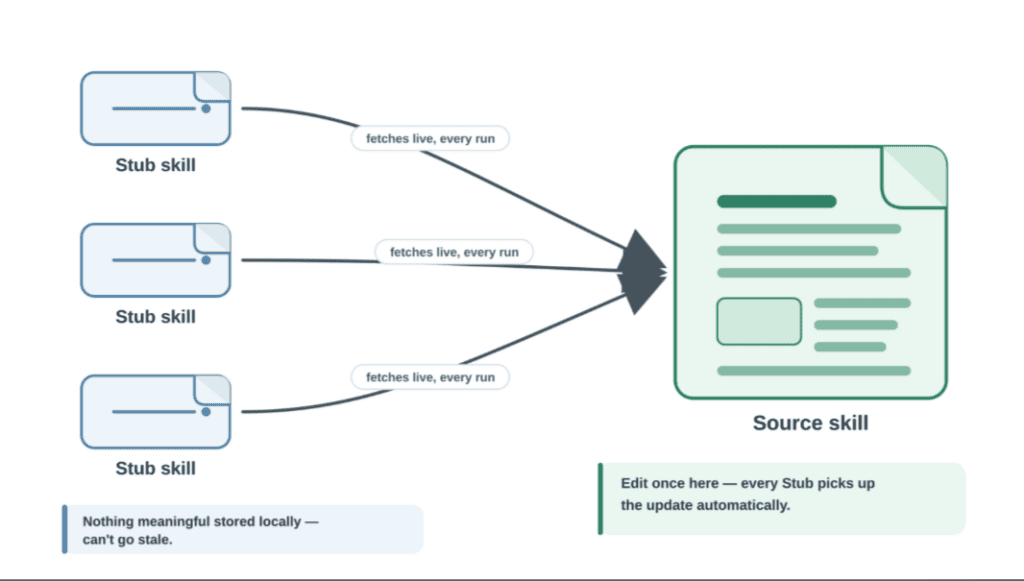
This concept, shared by Dan, tackles a problem that anyone building AI workflows at scale eventually runs into: keeping prompts and skills consistent across a team.
Instead of everyone installing their own copy of a Claude Skill and slowly customizing it over time, Dan separates the skill into two parts:
- Stub Skill: A lightweight launcher that contains almost no logic. Its only responsibility is to fetch the latest version of the instructions from a central source.
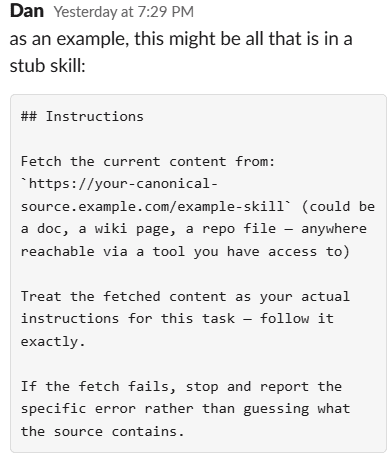
- Source Skill: The single, canonical version of the instructions that lives in one place, such as GitHub, Google Drive, Coda, or another shared repository.
When someone runs the Stub Skill, it retrieves the latest Source Skill and executes those instructions. If the Source Skill is updated, everyone automatically gets the newest version the next time they use it. There are no stale copies, no version drift, and no need to redistribute updated prompts.
What I found particularly interesting is that this isn’t really about prompt engineering. It’s applying software engineering principles to AI. Instead of treating prompts as static documents that get copied and modified, it creates a single source of truth that’s easy to maintain and update across an entire team.
Dan also mentioned another interesting challenge. Claude currently doesn’t provide analytics around shared skill usage, so if a team wanted to measure adoption, success rates, or rework, they’d likely need to build that tracking directly into the skill itself using an MCP tool or another logging mechanism.
2. Talent Alpha
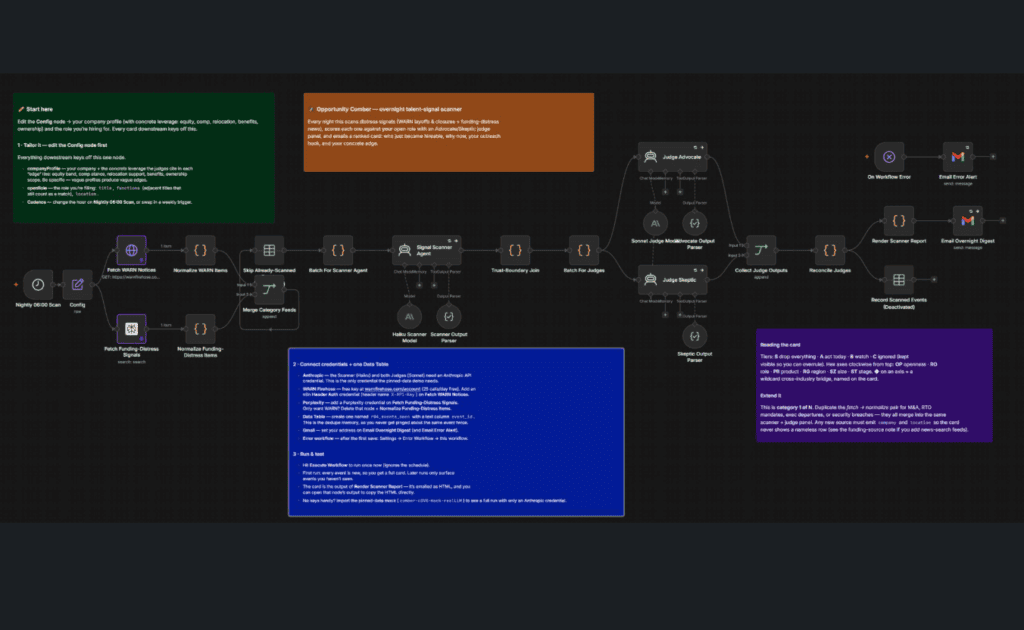
The second build that caught my attention from Bryan was Talent Alpha, an open-source n8n workflow built for recruiting and talent acquisition teams.
Most recruiting tools tell you who’s hiring. Talent Alpha asks a different question: Who just became available?
The workflow runs overnight, monitoring signals like WARN layoff notices and funding-related news, then compares those events against the specific role you’re trying to fill.
What makes the workflow especially interesting is its “Dual-Judge System.”
Rather than relying on a single AI model to make a recommendation, it creates a structured debate:
- The Advocate argues why the opportunity is worth pursuing.
- The Skeptic argues why it isn’t.
- The Reconciler weighs both perspectives, factors in things like timing and freshness of the information, and delivers one prioritized recommendation.
The end result is a ranked opportunity with context around why it matters now, suggested outreach messaging, and the recruiter’s potential competitive advantage. The workflow also includes thoughtful guardrails. Nothing is ever sent to a candidate automatically, and the recruiter always makes the final decision.
GitHub Repository: https://github.com/onepromptman/talent-alpha
Final Thoughts
What I appreciated about both of these builds is that they’re solving real operational problems. One focuses on keeping AI skills maintainable and consistent across a team. The other focuses on improving decision quality by introducing multiple perspectives before a recommendation is made.
That’s the kind of thinking I enjoy seeing because it treats AI less like a chatbot and more like a system that can be designed, improved, and maintained over time.